We have a soft spot for waterfalls. It's the kind of outing that ticks every box: a bit of walking, plenty of cool air, and at the end of the path, that sound of water drowning out everything else. Auvergne has dozens of them, from big falls tumbling off a basalt cliff to little cascades tucked away in a beech wood. We've gathered our favourites here, spread across the four départements, each with a link to its detailed page.
Why Auvergne is waterfall country
Geology does all the work. Under your feet are old lava flows, frozen into basalt columns. When a river meets that kind of rock step, it tips over the edge and you get a waterfall. Add a young volcanic landscape, plateaus being carved out, gorges everywhere, and you can see why the area is full of them.
You earn many of these waterfalls with fifteen or twenty minutes on a path, sometimes less. Some you can even see from the road. That's what makes them perfect for a family outing or an impromptu break between two visits.
When to go
The best time is spring. Snowmelt from the Sancy and the Cézallier swells the rivers, and the waterfalls give it everything they've got. April, May, June: the flow is strong, the vegetation is coming back, the days are getting longer. Hard to beat.
Autumn plays in a different league. The flow drops after summer, but the beeches and rowans turn russet and gold around the water. For photos, that's often when it happens.
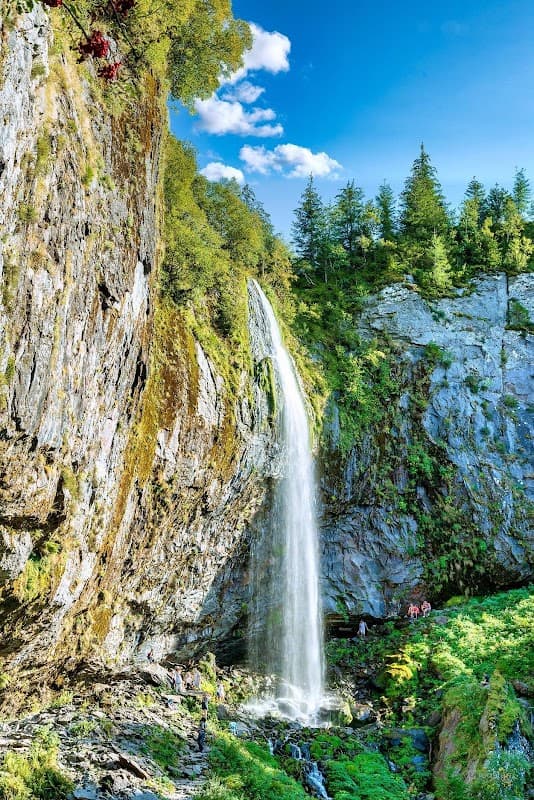
Summer is still pleasant for the cool air, as long as you go early in the morning to the well-known sites, before the families arrive. And in winter, some waterfalls partly freeze and form curtains of ice. The sight is worth the trip, but the ground gets treacherous: it's for well-equipped people only. And in Le Mont-Dore, for safety reasons, a municipal order bans access to the Grande Cascade from 15 November to 1 April.
Our simple tip: go after a good spell of rain. A waterfall you found ordinary in August can turn impressive two days after a storm.
Safety, a two-minute read that matters
We won't lecture you, just remind you of the essentials. The rocks around a waterfall are always more slippery than they look: moss, spray, constant damp. Shoes with good grip make all the difference.
Don't try to climb up alongside the waterfall or get close to the edge above the drop. Every year, slips spoil outings that should have stayed peaceful. Children hold hands near the water, that's the rule.
Also watch out for water releases on rivers with dams upstream: the level can rise fast. And in flood conditions or just after heavy rain, what looks spectacular from a distance becomes dangerous up close. You look, you don't play with it.
The great classics, the ones we show everyone
If you're new to Auvergne's waterfalls, start with these. Easy to reach, generous with water, they never disappoint.
The most obvious one is the Cascade de Saillant, near Saint-Nectaire. Here the Couze Chambon cuts through a lava flow and forms a 7-metre drop, in the hamlet of Saillant, 1 km from the village towards Issoire. There's a car park and a picnic area on site. Swimming is strictly banned, both upstream and downstream of the waterfall. It's the waterfall you take grandparents and kids alike to see.
In a different style, the Cascade de la Beaume, near Solignac-sur-Loire in the Haute-Loire, flows over a broad rock face and stands out for its sheer size. After rain, it takes on a look that commands respect. A purpose-built viewpoint gives you the whole thing at a single glance.
Further north, in the Allier, the Cascade de la Pisserote is tucked away in the Montagne Bourbonnaise, at Arfeuilles. A short forest path takes you there. It's cool, it's green, it's the kind of place where you sit down on a rock and lose track of time.
The waterfalls of the Sancy and the Mont-Dore massif
The Sancy massif is Auvergne's water tower. All that snow melts somewhere, and the result is some of the finest falls in the region.
The Cascade du Saut du Loup, in Le Mont-Dore, is reached from the Cascade du Queureuilh: a path climbs up to it, 1 km higher, with 116 metres of ascent.
A little further on, the Cascade du Gour des Chevaux, at La Tour-d'Auvergne, is reached by a path on the left, after the Camping de la Chauderie, as you leave the village on the D203 towards Besse. Here the river goes over a big rock and forms two pools that trace a large S.
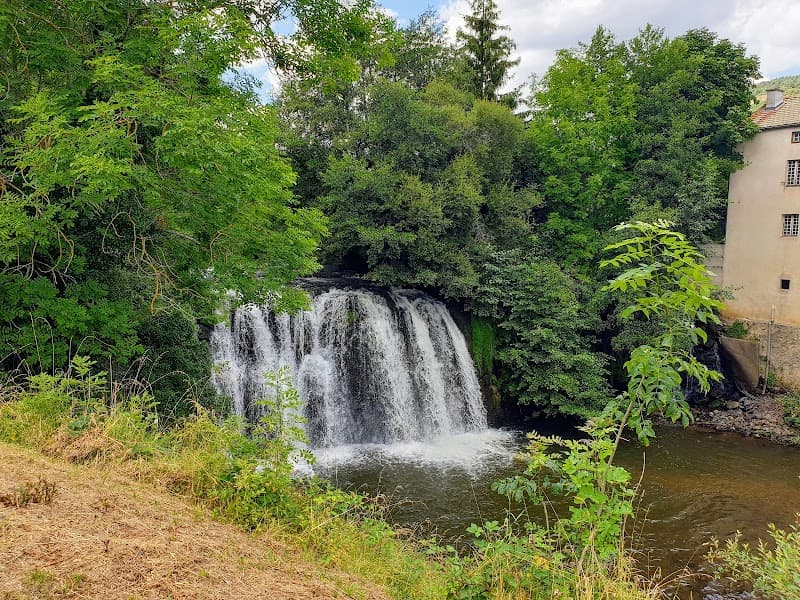
Also at La Tour-d'Auvergne, the Cascade du Pont-de-Pierre keeps it simple: the Gagne leaps a 15-metre granite step a stone's throw from the D47, on the road to Bagnols, as you leave the village, and you can see it from the road. There's a car park and a picnic area nearby: just take care crossing the road. The name comes from a Roman bridge: an ancient road ran through here, and the pottery and coins found while the road was being built now rest in the Musée Bargoin, in Clermont-Ferrand.
Over towards Chambon-sur-Lac, the Cascade de la Biche is waiting for you in the Vallée de Chaudefour, one of the three glacial valleys of the Sancy massif, a national nature reserve since 1991 and very popular with hikers. From the Réserve car park, the valley floor is an easy walk, and you can carry on to the waterfall. Dogs are banned, even on a lead.
And while you're in the Mont-Dore area, two safe bets are waiting for you: La Grande Cascade, the highest fall in the massif (32 metres), clinging to the slopes above the resort, about an hour and a half there and back from the town hall, with 225 metres of steep climbing; and the Cascade du Queureuilh, more intimate, with more than 20 metres of water pouring over basalt columns. From the car parks on Avenue de La Bourboule, an easy 2.4 km loop, about an hour, links it with the Cascade du Rossignolet.
Around Besse and Laqueuille
Let's stay in the Puy-de-Dôme.
At Besse-et-Saint-Anastaise, the Vaucoux or Anglard waterfalls are in fact a single fall going by two names: the water tumbles down about 12 metres of volcanic rock in the Bois de Champs, 3 km from Besse. Park on the verge of the road to Compains, then allow ten minutes' walk downhill, on a path that gets slippery in wet weather: bring good shoes.
Further west, at Laqueuille, the Cascade du Trador leaps down a lava flow, and behind the curtain of water stand basalt columns. An easy path gets you there in about thirty minutes, from the car park at the Pont du Verdeix, about 1 km from the village towards Saint-Sauves.
The waterfalls of the Cantal
In the Cantal, the waterfalls keep a real taste of adventure. The volcanoes are older and more eroded, and the water has carved out corners worth the trip.
At Thiézac, the Cascade de Faillitoux pours down a wall of perfectly formed basalt columns. A textbook geology case as much as a fine waterfall, it drops 41 metres, and you reach it on foot by a waymarked path from the hamlet of Lasmolineries.
Near Landeyrat, on the Cézallier plateau, the Cascade des Veyrines flows through a landscape of wide open spaces and burons (the old stone huts of the summer pastures). You can breathe up there. The contrast between the bare plateau and the waterfall's little canyon is striking.
At Cheylade, the Cascade du Sartre drops 32 metres into a narrow cirque, on the Petite Rhue, a few metres from the Lac des Cascades. A sphere-shaped metal structure, designed for the site's safety, carries telescopes and listening points.
Near Vitrac, in the Châtaigneraie, Le trou du Diable (the Devil's Hole) owes its name to a legend: a jumble of boulders blocks the course of the Rance here, and over the centuries the water swirling between the blocks has carved out gours, stones polished smooth by the water. An easy quarter of an hour's walk takes you there, hiking boots recommended, and the atmosphere is completely different from the high plateaus.
Finally, at Andelat, right next to Saint-Flour, the Cascade du Sailhant, also known as the Cascade de Babory, makes a perfect stop if you're passing through the area. Near the Château du Sailhant, built on a basalt spur, it plunges into a deep pool of calm, dark water, 500 metres on foot from the car park.
How to plan your day
The right move is to group by area. Around Le Mont-Dore, you can easily string together several waterfalls in the same half-day. In the Cantal, allow more driving between two sites, but each stop goes well with a village, a buron or a viewpoint.
Bring water, a windproof jacket (it's always cooler near the water), and good shoes. A picnic fits very nicely beside a waterfall. And keep your camera handy: morning light and late-afternoon light dress the water far better than the full midday sun.
The pages linked in this guide detail how to reach each waterfall. Open them before you set off, it saves you last-minute surprises.
Questions we get asked
FAQ
What is the most beautiful waterfall in Auvergne for a first visit?
For an effortless introduction, go for the Cascade de Saillant near Saint-Nectaire: car park and picnic area on site, and a 7-metre drop. On the Mont-Dore side, La Grande Cascade is also an excellent starting point, except in winter: a municipal order bans access from 15 November to 1 April.
Can you see Auvergne's waterfalls as a family with young children?
Yes, many are reached by short, easy paths. Saillant or La Beaume suit little legs well. Just hold children's hands near the water and wear shoes with good grip, the rocks stay slippery.
What is the best season for Auvergne's waterfalls?
Spring, when snowmelt from the Sancy swells the rivers and pushes the flow to its peak. Autumn brings the best colours around the water. Whatever the season, go after a spell of rain if you can.
Do you have to walk far to reach these waterfalls?
It depends. Ten minutes on foot for Vaucoux, about an hour and a half there and back for the Grande Cascade, and some you can almost see from the road. Each detailed page explains how to reach its waterfall.
Are the Cantal waterfalls worth the detour compared with those in the Puy-de-Dôme?
Absolutely, and for a different atmosphere. Faillitoux, with its 41-metre drop and its basalt columns, or the Sartre, with its 32 metres into a narrow cirque, are well worth the journey. Just allow a bit more driving between sites.
Your Cantal waterfall day, ready to load
For the day, we've put the itinerary together for you: Faillitoux and its basalt columns in the morning, then the Cascade de la Roche, at Cheylade, for a gentle finish. Two valleys, two atmospheres.
Load this itinerary on the interactive map: both stops go straight into your road trip, with export to Google Maps in one click.