Auvergne has the largest group of volcanoes in mainland France, by a long way. But they don't all look alike: here a line of young cones with intact craters, there the remains of a giant stratovolcano planed down by glaciers, elsewhere a lava plateau covered in summer pastures. Understanding these differences already tells you where to go. This guide gives you the big picture, then the sites not to miss depending on how much time you have.
Five volcanic massifs, five stories
The Chaîne des Puys: the young volcanoes
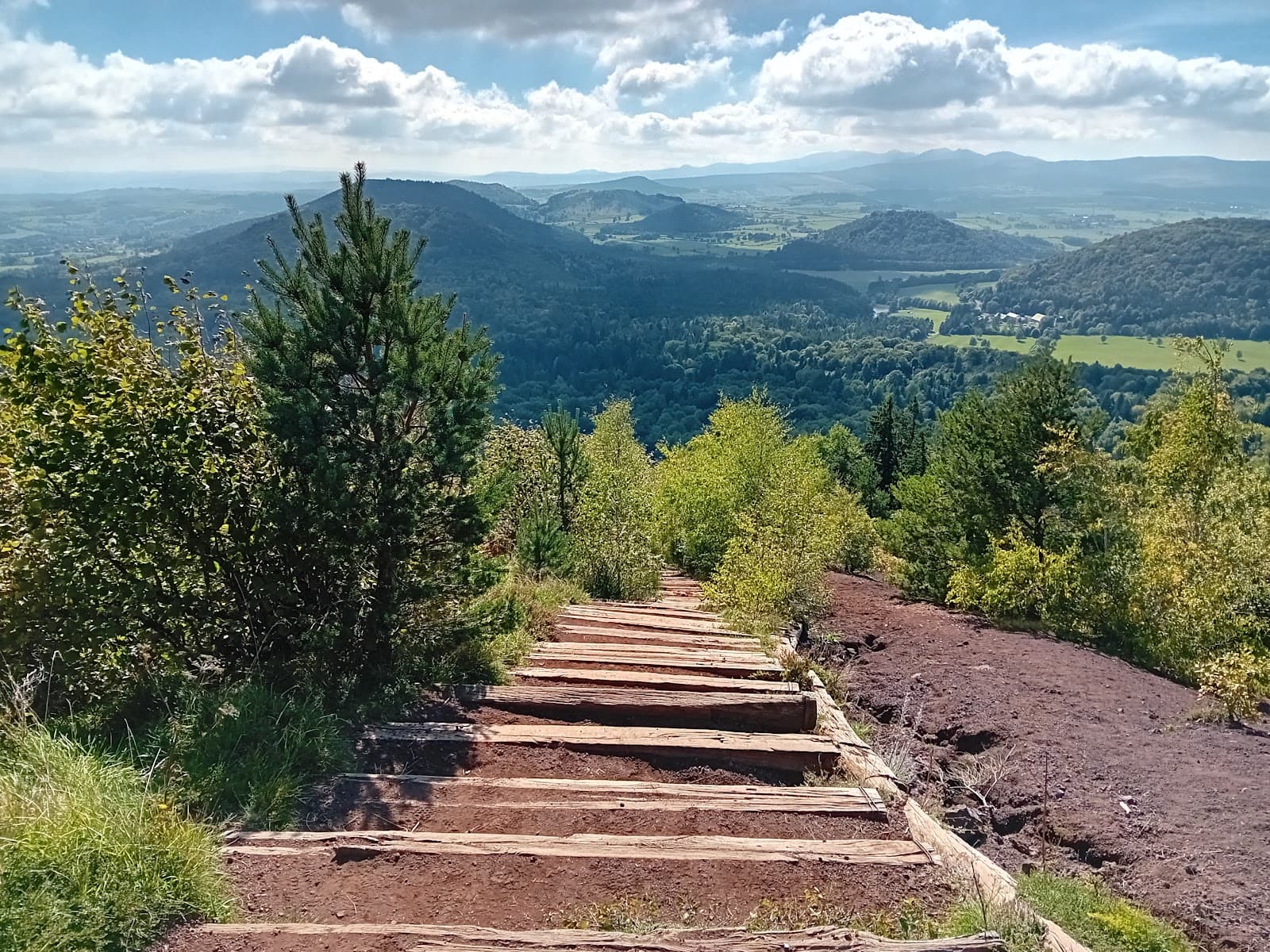
This is the postcard picture of an Auvergne volcano: a line of around 80 volcanoes running north to south, 32 kilometres long and 4 wide, west of Clermont-Ferrand. They are the youngest volcanoes in mainland France, or nearly: the chain built up between 95,000 and 8,400 years ago, and its last eruption, at the Puy de la Vache and the Puy de Lassolas, dates back 8,400 years. The blink of an eye on a geological scale. The record for youth in mainland France goes to the Pavin, a notch further south, which is around 7,000 years old. You'll find three forms here: scoria cones with a crater (like the Puy de Pariou or the Puy de la Vache), domes of thick lava (the Puy de Dôme, 1,465 m, which towers over the whole plateau), and maars, explosion craters that are sometimes filled with water.
The Massif du Sancy: the eroded stratovolcano
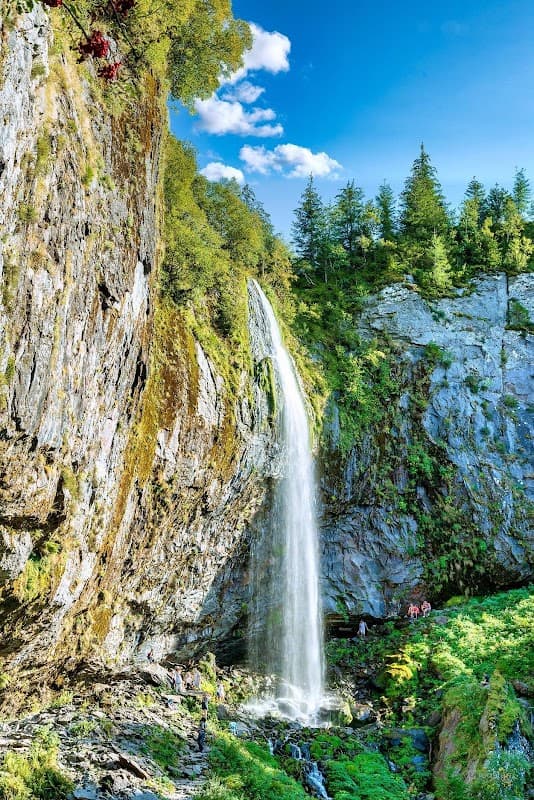
A change of scenery further south. The Massif du Sancy, or Monts Dore, is what remains of a large stratovolcano taken apart by erosion and glaciers. Its summit, the Puy de Sancy (1,885 m), is the highest point of the Massif Central and the highest volcano in mainland France. Here the shapes are soft, carved into U-shaped glacial valleys, and water is everywhere: waterfalls, crater lakes like the Pavin, peat bogs.
The Monts du Cantal: the largest stratovolcano in Europe
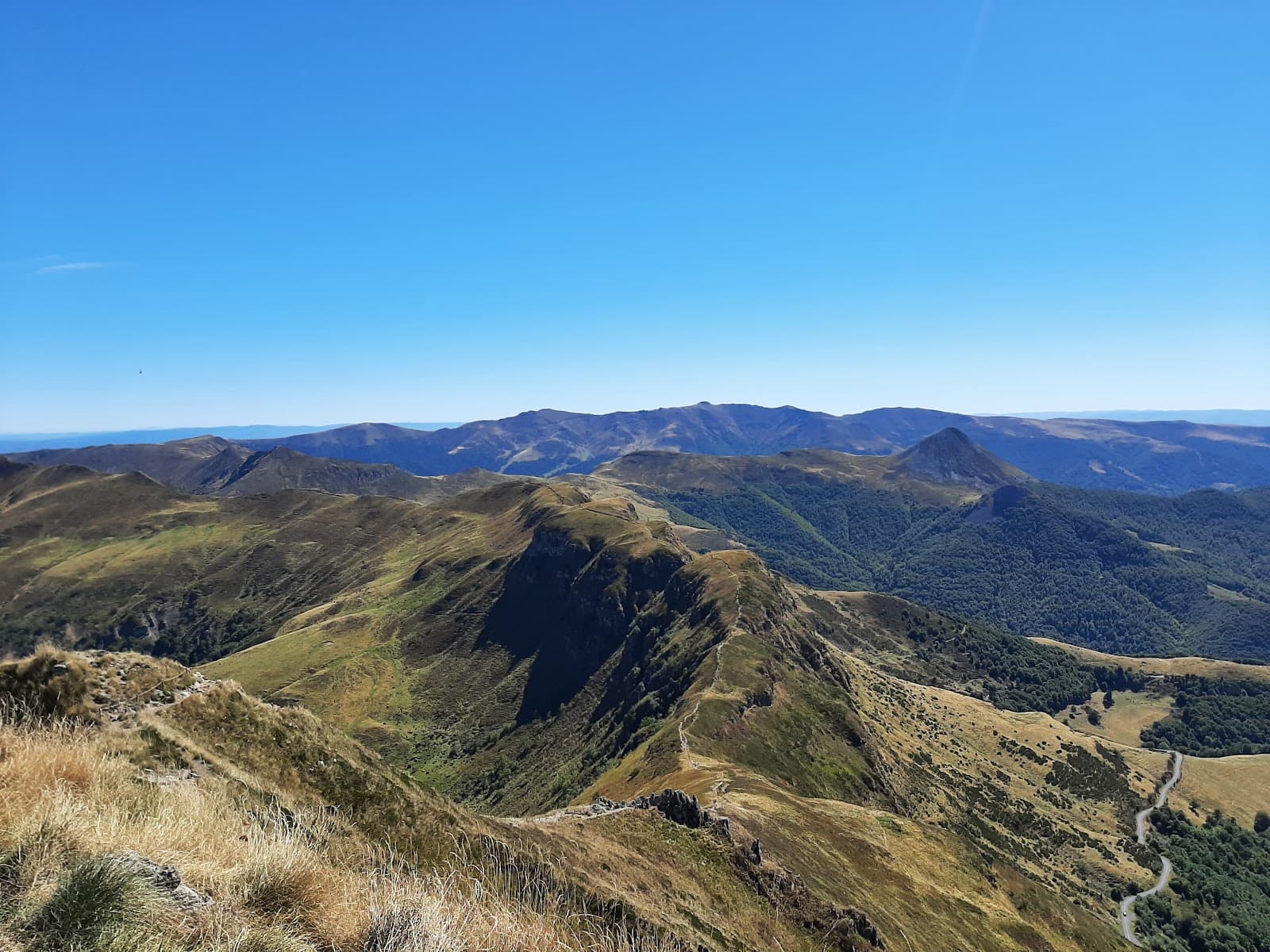
Further south still, the Cantal hides a giant: the remains of the largest stratovolcano in Europe, born around 13 million years ago, whose structure covered an ellipse 70 kilometres across. All that's left are the radiating ridges, but what ridges: the Puy Mary (1,783 m, a Grand Site de France), from which seven glacial valleys fan out like a star, and the Plomb du Cantal (1,855 m, the highest point).
The Cézallier and the Devès: the lava plateaus
Between the Sancy and the Cantal lies the Cézallier, a vast basalt plateau of summer pastures and peat bogs, the realm of grazing herds in summer, and of silence. And further east, in Haute-Loire, the Devès plateau carries some 150 scoria cones and maars, including the Lac du Bouchet, a perfectly round crater in the middle of the fir trees.
The UNESCO listing: what it really covers
Since 2018, the Chaîne des Puys has been on the UNESCO World Heritage List, as part of the property "Chaîne des Puys - Limagne Fault". It was the first natural site in mainland France to be listed, recognised for its geology: it shows how a continent tears apart and rises up.
Something many people don't know: the listing does not cover all of volcanic Auvergne. It only concerns the Chaîne des Puys, the Limagne Fault that borders it to the east, and the high ground of the Montagne de la Serre. Neither the Sancy, nor the Cantal, nor the Cézallier is within the UNESCO area, even though they're every bit as remarkable. To dig deeper into this, see our page on the UNESCO-listed Chaîne des Puys.
All of it, or nearly, is protected by the Parc naturel régional des Volcans d'Auvergne, the largest regional nature park in mainland France (388,957 hectares, 149 communes), created back in 1977.
How to visit them, depending on your time
On foot
It's the best way to understand a volcano: climb it. You can go up the Puy de Dôme by the Chemin des Muletiers (45 minutes to 1 hour from the Col de Ceyssat) or by train. For the Puy de Pariou and its perfect crater, as for the Puy des Goules, you start from the Goules car park: a 6.5 km hike for the first, a loop of about 4.5 km for the second. At the Puy de la Vache and the Puy de Lassolas, the departmental council and the Parc des Volcans have been running a restoration project since February 2026, expected to last two years: since 13 May 2026, a municipal order has prohibited climbing either puy. The long-distance trail at the foot of the volcanoes remains passable, and the quarry at the foot of the Puy de la Vache remains accessible. On the Sancy side, the climb to the summit and the neighbouring puys (l'Angle, la Tache) give you 360° panoramas. If you were counting on the cable car, it closes for works from 31 August to 18 December 2026: during that period, you go up on foot, via the Val de Courre for example. In the Cantal, the climb up the Puy Mary from the Pas de Peyrol is short and spectacular.
By train and at visitor sites
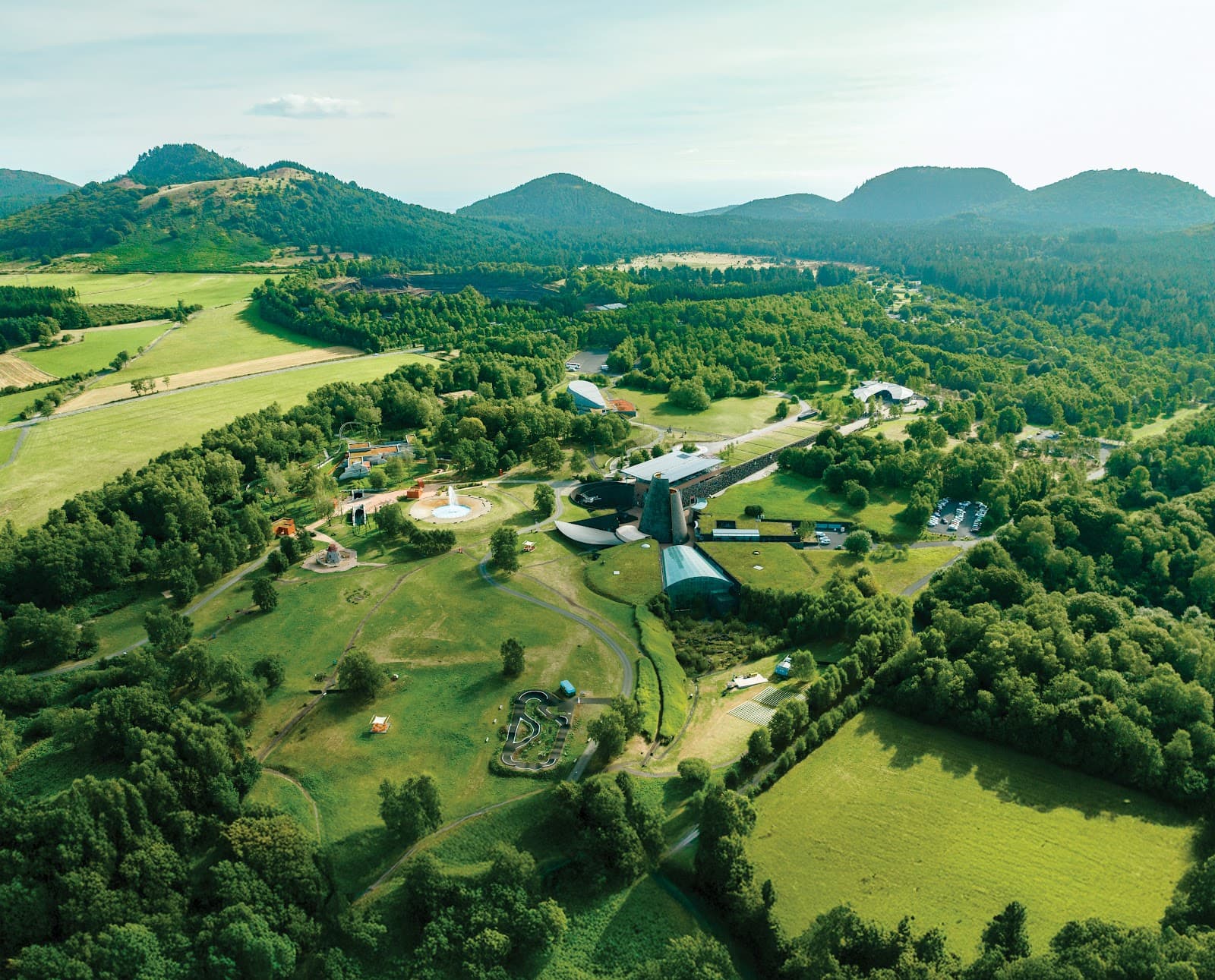
Don't feel like walking? The Panoramique des Dômes rack railway takes you to the top of the Puy de Dôme in 15 minutes, where the remains of the Gallo-Roman temple of Mercury are waiting for you. From 1 September to 1 November 2026, the train runs every 40 minutes from 9:00 to 19:00; then every hour from 10:00 to 17:00, Wednesday to Sunday, until 18 December (closed for maintenance from 16 to 20 November); and every 30 minutes from 19 December 2026 to 3 January 2027, except on 25 December. To understand volcanoes as a family, two sites are open to visitors: Vulcania, the park devoted to Earth sciences, and the Volcan de Lemptégy, a real volcano you explore from the inside.
From a viewpoint
Some sites can be enjoyed without any effort. The Roches Tuilière and Sanadoire, two lava peaks near the Col de Guéry, are viewed from a laid-out viewpoint. The Plateau de Gergovie, where Vercingetorix defeated Caesar, opens up a panorama over the whole chain.
How much time to allow
- A weekend: focus on the Chaîne des Puys. The Puy de Dôme (on foot or by train), the Puy de Pariou, Vulcania or Lemptégy, and a viewpoint. Enough to grasp the essentials.
- A week: add the Massif du Sancy (the climb, the lakes, the waterfalls) and a day in the Cantal around the Puy Mary. You'll have seen the three main faces of Auvergne's volcanoes. A seasonal note: the Sancy cable car is out of service for works from 31 August to 18 December 2026. Until then, you reach the summit on foot.
- Longer: push on to the Cézallier and its summer pastures, or the Velay and its maars, for the most secret side of volcanic Auvergne.
Your questions
What is the highest volcano in Auvergne? The Puy de Sancy, at 1,885 metres: it's also the highest point of the Massif Central and the highest volcano in mainland France. The Plomb du Cantal (1,855 m) comes close behind.
Are the Auvergne volcanoes extinct? They're described as dormant rather than extinct: the last eruption in the Chaîne des Puys was around 8,400 years ago, which is very recent on a geological scale. But nothing points to them waking up, and the chain remains under monitoring.
Which volcano should you visit with children? The Puy de Dôme by train, Vulcania and the Volcan de Lemptégy are the best suited. For a first climb on foot, the Puy de Pariou or the Puy des Goules suit families who are used to walking.
Is all of Auvergne UNESCO-listed? No: only the Chaîne des Puys, the Limagne Fault and the Montagne de la Serre are. The Sancy, the Cantal and the Cézallier fall outside the area, which doesn't make them any less beautiful.