The route
The stages below are only suggestions.
What it is like
Discovering the Ways of St James
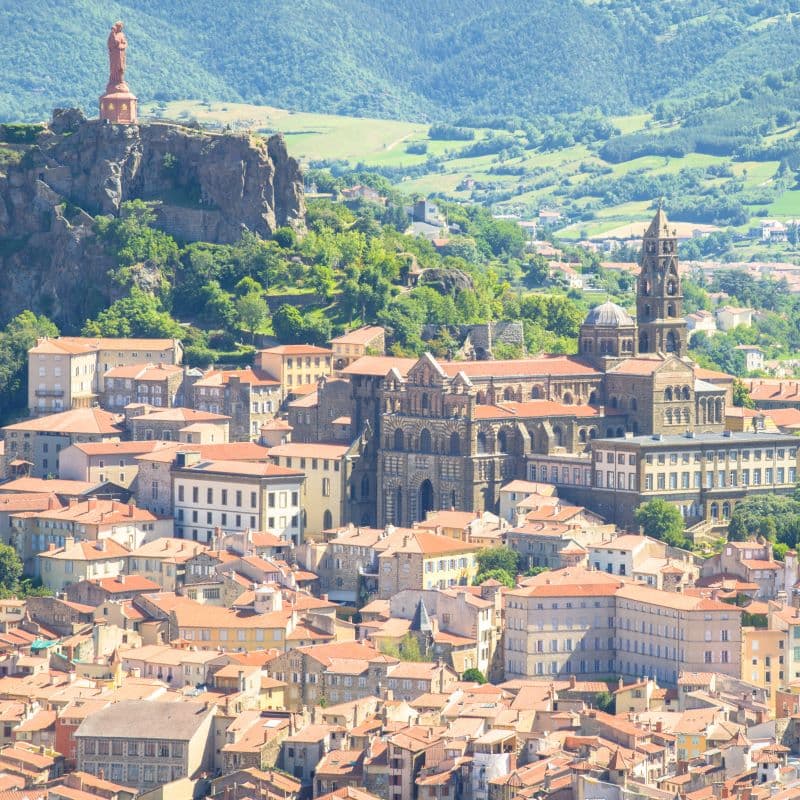
Quatuor viae sunt... According to the Pilgrim's Guide to Santiago de Compostela, written around 1140, “there are four roads that lead to Santiago”. This guide, meant for pilgrims coming from France or beyond, leaves out the routes coming from the south or the east of the Iberian Peninsula. The first road sets off from Arles and reaches Spain over the Col du Somport, after passing through Saint-Gilles-du-Gard, Montpellier and Toulouse. This road, known as the “via tolosana” or “via egidiana”, is a real cascade of minor pilgrimages: Saint Trophime, Saint Césaire, Saint Honorat and Saint Genès at Arles and Trinquetaille, Saint-Gilles-du-Gard, Saint-Guilhem-du-Désert, Saints Tibère, Modeste and Florence at Saint-Thibery, and finally Saint Sernin at Toulouse. The Guide says nothing about the route to follow from Montpellier to Toulouse, and gives no more detail about the stretch from Toulouse to the Col du Somport, where the “Aragonese way” begins. The second road is our “via podiensis”, described as the road “of the Burgundians and the Teutons”. Naming only Conques and Moissac as stops between Le Puy and Ostabat, the Guide leaves plenty of uncertainty about its exact route... The third road is the one “that passes through Sainte-Marie-Madeleine de Vézelay, Saint-Léonard in the Limousin, and the town of Périgueux”. According to the Guide, the road goes through Limoges. On the other hand, no waypoint is given between Périgueux and Ostabat. Notre-Dame du Puy-en-Velay. The fourth road is the “via turonensis”. The great devotion here is to Saint Martin of Tours, apostle of the Gauls, which is older than the devotion to Saint James: the Way of St James is (as R. de La Coste-Messelière put it) nothing more than “the Way of Saint Martin turned around”! After Tours, pilgrims went on to Poitiers (Saint Hilaire), Saint-Jean-d'Angély and Saintes (Saint Eutrope), then reached Blaye and crossed the Gironde to get to Bordeaux, cross the Landes and join the two previous roads at Ostabat, forming the “Navarrese way”, the start of the “French way” that leads all the way to Compostela via Logrono, Burgos, Leon, Astorga, Ponferrada and the O Cebreiro pass. So, of these four roads, the Le Puy route is not the one the Guide describes best. Yet it is one of the two best known (along with the Tours route), through the studies devoted to it. Thanks to those studies, it was the first to be designated a Sentier de Grande Randonnée (long-distance footpath) as close as possible (given present-day constraints) to the historical reality. It is also the most charming to walk, for the wild beauty of some of its sections and the majesty of the great monuments of faith along the way.