
33 - The Protestant mountain
Start: parking de la gare au Chambon-sur-Lignon
From the village of Le Chambon-sur-Lignon, you will set off towards the Ardèche, towards Mars, where there is an astronomical observatory. You will then reach Les Vastres by a quiet road; the village was known during the Second World War as a parachute drop site. The moorland landscapes will reveal an unspoilt environment with fine panoramas as far as Mont Mézenc, lord of the Cévennes. From Le Mazet-Saint-Voy you will head back towards Le Chambon-sur-Lignon.
- Distance
- 36 km
- Elevation gain
- +507 m
- Elevation loss
- -509 m
- Duration
- 2 h
Route on the map
Base map © OpenTopoMap (CC-BY-SA): route licensed under ETALAB-2.0 via Données : Comité Départemental Randonnée Pédestre Haute-Loire · FFRandonnée · sportsnature.hauteloire.fr — sous licence ETALAB 2.0.
The feel of the route
From the first half of the 16th century, the Reformation movement resulted in a more stripped-back faith and a return to the sources of the ancient texts. These ideas were introduced here by the parish priest Bonnefoy of Saint-Voy who, after a stay in Switzerland, managed, as early as 1560, to bring a population of 800 farming families over to the reformed religion.
The so-called reformed religion (the name given to Protestantism in the 17th century) spread across the whole of the Vivarais-Lignon Plateau.
But the wars of religion and above all the revocation of the Edict of Nantes in 1685, which abolished the right to practise the faith, were to have major repercussions.
First, in 1679, the demolition of the temple (Protestant church) of Le Mazet-Saint-Voy marked locally the movement under way in the kingdom of France to destroy Protestant places of worship, well before the revocation of the Edict of Nantes. Then came the harassment inflicted by the troops stationed in the region, and sometimes sentences to the galleys. But ties within the community were maintained thanks to the “assemblies of the Desert”, religious ceremonies held in the open air in secret places. The Lizieux forest sheltered “la Favéa”.
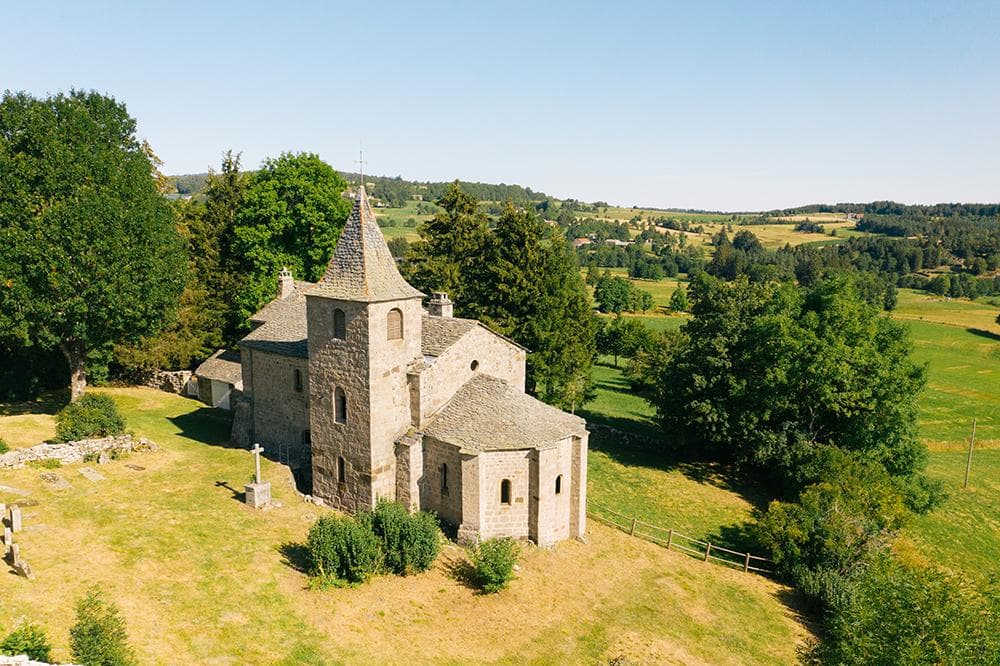
It was only under the reign of Louis XV (1715-1774) that Protestant worship was tolerated, and it was not until 1820 that work began on the current temple of Le Mazet-Saint-Voy.
In pictures
Other hikes in the area
 Mountain biking
 Mountain biking
 Mountain biking