Auvergne has nine approved spa towns: Vichy, Royat-Chamalières, Le Mont-Dore, La Bourboule, Châtel-Guyon, Châteauneuf-les-Bains, Bourbon-l'Archambault, Néris-les-Bains and Chaudes-Aigues. Between them, they cover eleven of the twelve orientations recognised by Assurance Maladie (the French national health insurance), from rheumatology to the respiratory tract by way of the heart and arteries: only phlebology is missing.
An approved cure means 18 days of treatment on prescription, with the thermal package reimbursed at 65%. A mini-cure, on the other hand, can be booked without a prescription and is not reimbursed. We go through everything, spa town by spa town. And if what you want first is relaxation, our big wellbeing guide to the region takes over.
The table for choosing your spa town
Each spa town is approved for specific orientations. You won't get your asthma treated in Vichy or your colon in Le Mont-Dore: each spring's water has its own specialities, validated by Assurance Maladie.
| Spa town | Département | Approved indications | Atmosphere |
|---|---|---|---|
| Vichy | Allier (03) | Digestive disorders and metabolic diseases, rheumatology | The elegant one: opera, parks, grand hotels |
| Royat-Chamalières | Puy-de-Dôme (63) | Cardio-arterial diseases, rheumatology | The Belle Époque city spa, on Clermont's doorstep |
| Le Mont-Dore | Puy-de-Dôme (63) | Respiratory tract, rheumatology | The mountain one, at the foot of the Sancy |
| La Bourboule | Puy-de-Dôme (63) | Respiratory tract, dermatology, oral and tongue mucous membranes, childhood developmental disorders | The family one, at gentle altitude |
| Châtel-Guyon | Puy-de-Dôme (63) | Digestive disorders, urinary disorders and metabolic diseases, rheumatology | The reborn one, around its Aïga resort |
| Châteauneuf-les-Bains | Puy-de-Dôme (63) | Rheumatology | The discreet one, beside the Sioule |
| Bourbon-l'Archambault | Allier (03) | Rheumatology, gynaecology | The medieval one, castle and quiet lanes |
| Néris-les-Bains | Allier (03) | Psychosomatic disorders, neurology, rheumatology | The Gallo-Roman one, gardens and theatre |
| Chaudes-Aigues | Cantal (15) | Rheumatology | The scorching one: water at 82 °C in the middle of the village |
One reminder that matters: this table helps you understand what's on offer, not prescribe anything for yourself. The orientation of your cure is decided with your doctor, based on your medical file. The doctor prescribes, the health insurance fund validates.
The nine spa towns, one by one
Vichy, the elegant one
The Queen of Spa Towns has 2,000 years of thermal cures behind it, and it shows: 140 hectares of parks, façades that tell the story of a century of curistes (people taking the cure), an opera house, colonnades. Digestive disorders and metabolic diseases are treated here, along with rheumatology, with a double orientation possible so that both can be treated in the same cure.
Two approved establishments share the curistes: the Thermes des Dômes and the Thermes Callou, with treatments Monday to Saturday, morning or afternoon. 2026 season: 16 February to 14 November at the Thermes Callou, the earliest in the region, and 8 June to 12 December at the Dômes, with the last cure starting on 23 November. Between treatments, go and taste the water at the Célestins spring: it prickles a little, it surprises you, it's part of the ritual.
Royat-Chamalières, the city one
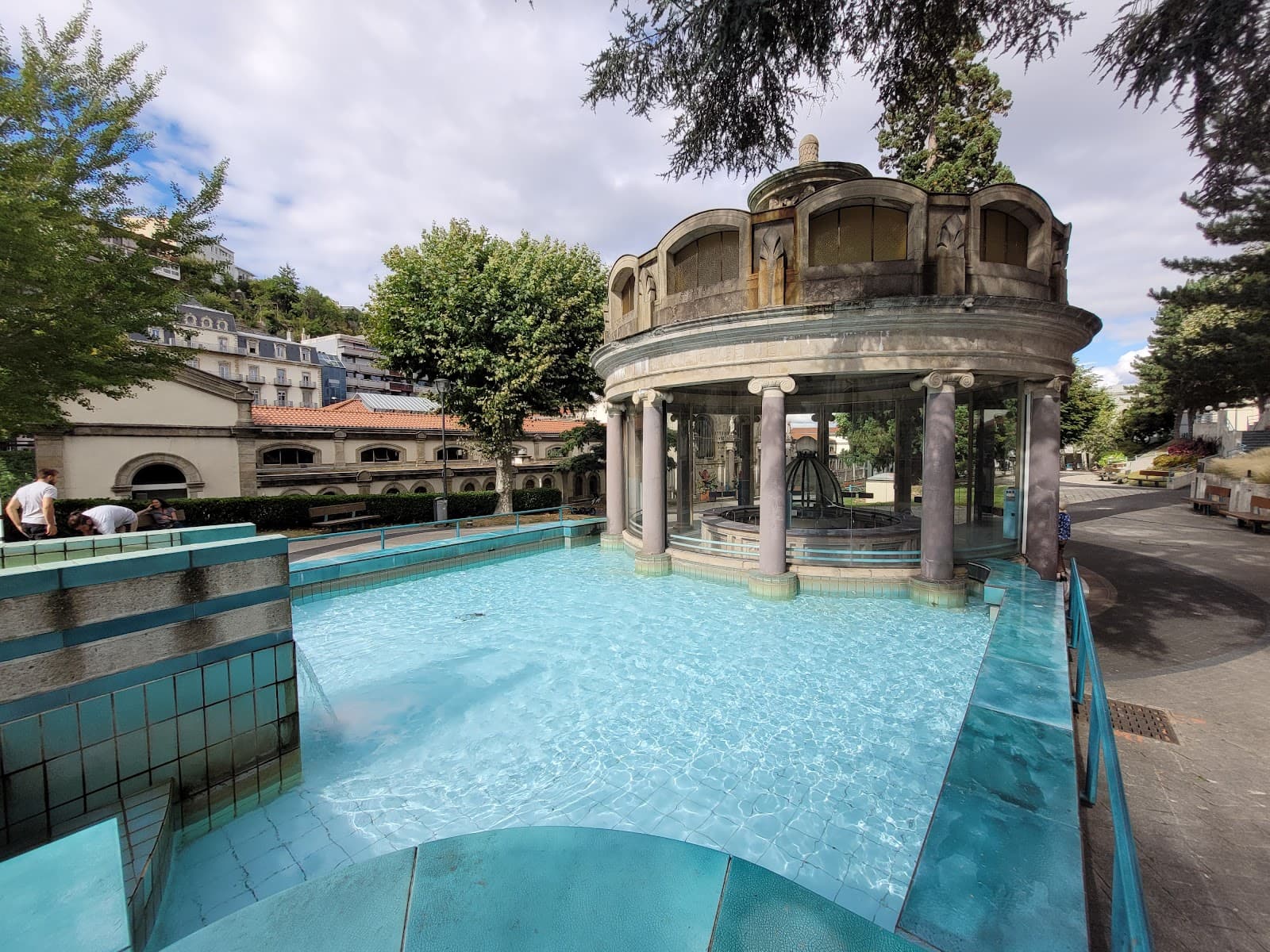
Royat is a cure ten minutes from Clermont-Ferrand, in a Belle Époque setting where a small valley opens out. Its distinctive feature is a serious one: it is the only spa town in Auvergne approved for cardio-arterial diseases (arteritis, Raynaud's syndrome, complications of diabetes), as well as rheumatology. The treatments combine thermal water and thermal gas, a rare pairing, and the long counter-current walking channel is something of an institution among the regulars.
The spa town also houses a cardiovascular research institute, which sets the bar. In 2026, the season runs from 13 April to 7 November. The route we recommend between treatments: the Thermes de Royat for the architecture, then a full circuit of the thermal park beneath the big trees.
Le Mont-Dore, the mountain one
Here you are at the foot of the Sancy, in a mountain cirque, and the establishment is worth a visit in itself: inspired by the Baths of Caracalla, listed as a historic monument, with heritage rooms still in use for respiratory treatments. The Thermes du Mont-Dore treat the respiratory tract (asthma, bronchial tubes, ENT) and rheumatology, with waters rich in silica.
In 2026, the season stretches from 2 April to 4 November, with the last cure starting on 16 October and treatments in the morning. In the afternoon, the mountain is yours.
La Bourboule, the family one
At 850 metres above sea level, in a climate low in allergens, La Bourboule is the spa town for families, with the Famille Plus label (a family-friendly label) to back it up. Its Grands Thermes, with their Byzantine domes, combine four orientations: respiratory tract, dermatology, conditions of the oral and tongue mucous membranes and childhood developmental disorders.
This is the region's big paediatric address: asthma, eczema, recurring rhinitis, children have been treated here for generations, and the town grew up around them. 2026 season: 6 April to 31 October. If you're hesitating between Le Mont-Dore and La Bourboule for respiratory treatment, the question to ask yourself is simple: are you coming alone or with the whole tribe?
Châtel-Guyon, the reborn one
Châtel-Guyon has found its spark again with Aïga, its new-generation thermal resort, a complex unique in Europe that brings together treatments, fitness and accommodation. The waters, the richest in magnesium in Europe, are approved for three orientations: digestive disorders and metabolic diseases (functional colopathy, irritable bowel), recurrent urinary disorders and rheumatology, with double orientations possible.
A detail that matters for your diary: in 2026, the season runs from 30 March to 5 December, with the last cure starting on 16 November. To stay without a car, the Thermalia hotel is a few steps from the thermal park.
Châteauneuf-les-Bains, the discreet one
The least known of the nine, and that is its charm. Châteauneuf-les-Bains sits in the Sioule valley, north of the Combrailles, and treats rheumatology in the atmosphere of a small spa town of times gone by: no resort, no colonnades, a river, plane trees and regulars who come back every year.
The 2026 season ran from 20 April to 10 October. In 2026, the last cure starting date here is set at 21 September, the earliest in the region. If you want thermal treatment in absolute calm, less than an hour from Clermont, this is your address.
Bourbon-l'Archambault, the medieval one
We like Bourbon for its rhythm: a town in the Allier where everything is done on foot, between the covered market, the lanes and the fortress. The spa town is approved for rheumatology and gynaecology, a rare combination, with a double orientation possible here too. The sodium chloride and bromo-iodide waters work in depth.
The 2026 season runs from 19 March to 21 November. Between treatments, climb up to the Château de Bourbon-l'Archambault: the towers overlook the town and tell the story of the family that gave its name to a dynasty.
Néris-les-Bains, the Gallo-Roman one
Néris has been treating people since Gallo-Roman times, and its town centre still bears the traces, between theatre, gardens and grand villas. It is the only spa town in the region approved for psychosomatic disorders and neurology, as well as rheumatology. Its waters, rich in lithium, are indicated against stress.
As for the calendar, the 2026 season ran from 23 March to 24 October, with the last cure starting on 5 October. The town is ranked among the Plus Beaux Détours de France (France's "most beautiful detours" label), and frankly, the detour is justified.
Chaudes-Aigues, the scorching one
In this Cantal village, between the Aubrac and the Truyère, the Par spring gushes out at 82 °C: the hottest water in mainland France, which was already heating houses in the Middle Ages. The Caleden establishment, approved for rheumatology (osteoarthritis, sciatica, after-effects of trauma, fibromyalgia), has never stopped its cures, and its thermal leisure area reopened on 22 October 2025 after several years closed.
In 2026, the machine is running at full tilt: thermal season from early March to 21 November, last cures starting in early November, and an aquatic leisure area open from 7 February 2026 to 3 January 2027. If your doctor sends you towards rheumatology and you dream of a wild setting, this is the place.
What it really costs
The 18-day approved cure
The principle: your doctor prescribes, Assurance Maladie covers part of it, the rest is yours. In detail, the thermal package (the treatments) is reimbursed at 65% of an agreed flat rate that varies by orientation. Medical supervision during the cure is reimbursed at 70% on a basis of €28 per consultation (€14 for the follow-up of a second orientation). Some complementary practices, such as fine-jet showers in dermatology, are covered at 70% on their own rates.
Transport and accommodation, for their part, only qualify for help subject to income: for a cure prescribed in 2026, if your 2025 income does not exceed a ceiling set at €14,664.38, you can receive 55% of a 2nd-class return SNCF ticket and 65% of an accommodation package of €150.01, i.e. €97.50. Above this ceiling, those costs are yours.
We'll say it plainly: the real expense is living there. Three weeks of accommodation and meals weigh far more than the patient's share of the treatments. Your top-up health insurance may cover part of the rest, depending on the rules of your contract. And remember the golden rule: only one cure covered per calendar year for the same condition.
The mini-cure, to try it out
No prescription, no reimbursement, no commitment: the mini-cure lasts 3 to 12 days and can be booked freely. Each programme treats the spa town's indications, with themes such as joint pain, stress or heavy legs.
It's the right format to check that a spa town suits you before committing to 18 days. One example we recommend: a thermal weekend in Vichy, two days of hot water and parks, and you know whether the atmosphere speaks to you.
The thermal pool by the day, for pleasure
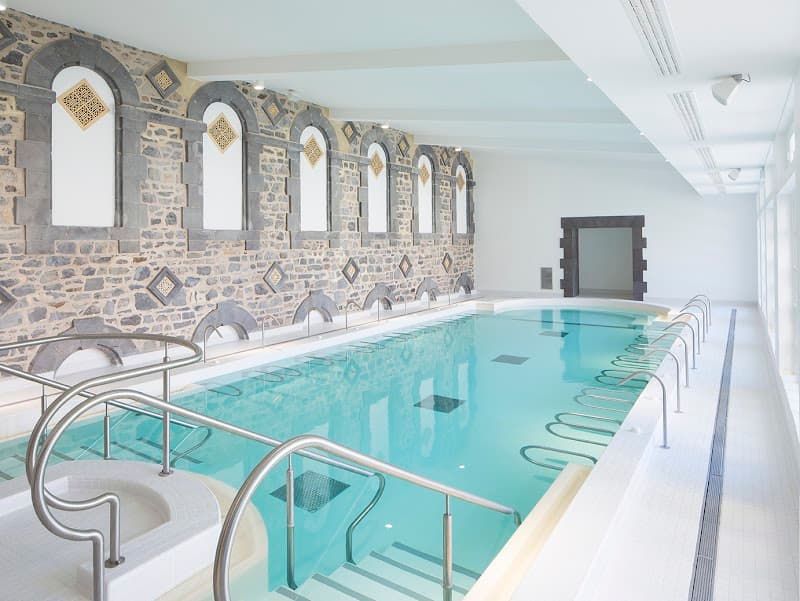
A third option, with no medical dimension: aquatic leisure areas fed with thermal water. At Chaudes-Aigues, an adult session of 2 hours 30 costs €19 in the morning and €21 in the afternoon in 2026. In Vichy, the Célestins institute goes upmarket, and in Royat, the hot-water pools make a perfect outing on a grey day. Nothing is reimbursed here, of course: it's wellbeing, not treatment.
How it works, from prescription to treatment
First step, the doctor. GP or specialist, they judge whether a cure is indicated and fill in the prescription, orientation included. You then send the request for coverage to your health insurance fund, and you wait for its approval before committing to anything.
Second step, booking. The fund's approval mentions the spa town designated by your doctor: you then book your dates directly with the thermal establishment. Our advice: book accommodation the same day, as well-placed furnished rentals for curistes go quickly. To help you find your way, we've listed where to stay in Vichy and where to stay in Le Mont-Dore.
Third step, the cure itself. On arrival, a thermal doctor sees you and sets your treatment programme. Then the rhythm settles in: treatments in the morning, Monday to Saturday, in most spa towns, 18 days of treatment spread over three weeks, afternoons free. It's this rhythm, as much as the water, that does you good.
Why September-October is a good window
If you can choose your dates, the late season makes a strong case for itself. The spa towns stay open late: until 12 December in Vichy (Thermes des Dômes), 21 November in Bourbon-l'Archambault and Chaudes-Aigues, 5 December in Châtel-Guyon. Summer crowds fall away, accommodation frees up, and the landscapes put on the show: autumn colours on the Sancy for the curistes of Le Mont-Dore and La Bourboule, golden light on the parks of Vichy and Royat.
Two cautions all the same. The last cure starting dates in 2026 come early at Châteauneuf-les-Bains (21 September) and Néris-les-Bains (5 October). And in the spa towns that close late, the last cure starting date in 2026 falls before closing: 2 November at Bourbon-l'Archambault and Chaudes-Aigues, 16 November at Châtel-Guyon, 23 November at Vichy.
For a cure in 2027, an Assurance Maladie rule matters: an approval for coverage given in the last quarter is valid for the first calendar quarter of the following year, unless it is issued in December, in which case it is valid for the whole of the following calendar year. The approval mentions the spa town designated by your doctor: book the cure and accommodation straight afterwards.
Last point: the dates quoted here are those of the 2026 season, and they change from one year to the next.
Frequently asked questions
The FAQ
Is a thermal cure reimbursed by Assurance Maladie?
Yes, provided it is prescribed by your doctor and carried out in an approved establishment, for an approved orientation. The thermal package is reimbursed at 65% of an agreed rate, medical supervision at 70%. Transport and accommodation only qualify for help subject to income. Only one cure per calendar year.
Which Auvergne spa town should I choose for a rheumatology cure?
Eight of our nine spa towns are approved for rheumatology; only La Bourboule is not. The choice therefore comes down to setting and water: the record heat of Chaudes-Aigues, the mountain at Le Mont-Dore, the town and its parks at Vichy, the calm of Châteauneuf-les-Bains. Your doctor decides based on your file.
Can you take a thermal cure without a prescription?
Yes, as a mini-cure of 3 to 12 days. No prescription is required, but nothing is reimbursed by French social security. It's the ideal format for trying a spa town before committing to a full cure.
How long does an approved cure last?
18 days of actual treatment, spread over three weeks, with treatments in the morning, Monday to Saturday, in most spa towns. Add the thermal doctor's consultation at the start of the stay. Below this length, the cure does not entitle you to Assurance Maladie coverage.
When should you book a thermal cure for 2027?
It all depends on your fund's approval: given in the last quarter, it is valid for the first calendar quarter of the following year, unless it is issued in December, in which case it is valid for the whole of the following calendar year. The approval mentions the spa town designated by your doctor: book the cure and accommodation at the same time.
Which spa town for a child?
La Bourboule, without hesitation. Approved for the respiratory tract, dermatology and childhood developmental disorders, with the Famille Plus label, at 850 metres above sea level in a climate low in allergens. Asthma, eczema, recurring ENT problems: the town has been treating children for generations and everything there is designed for them.