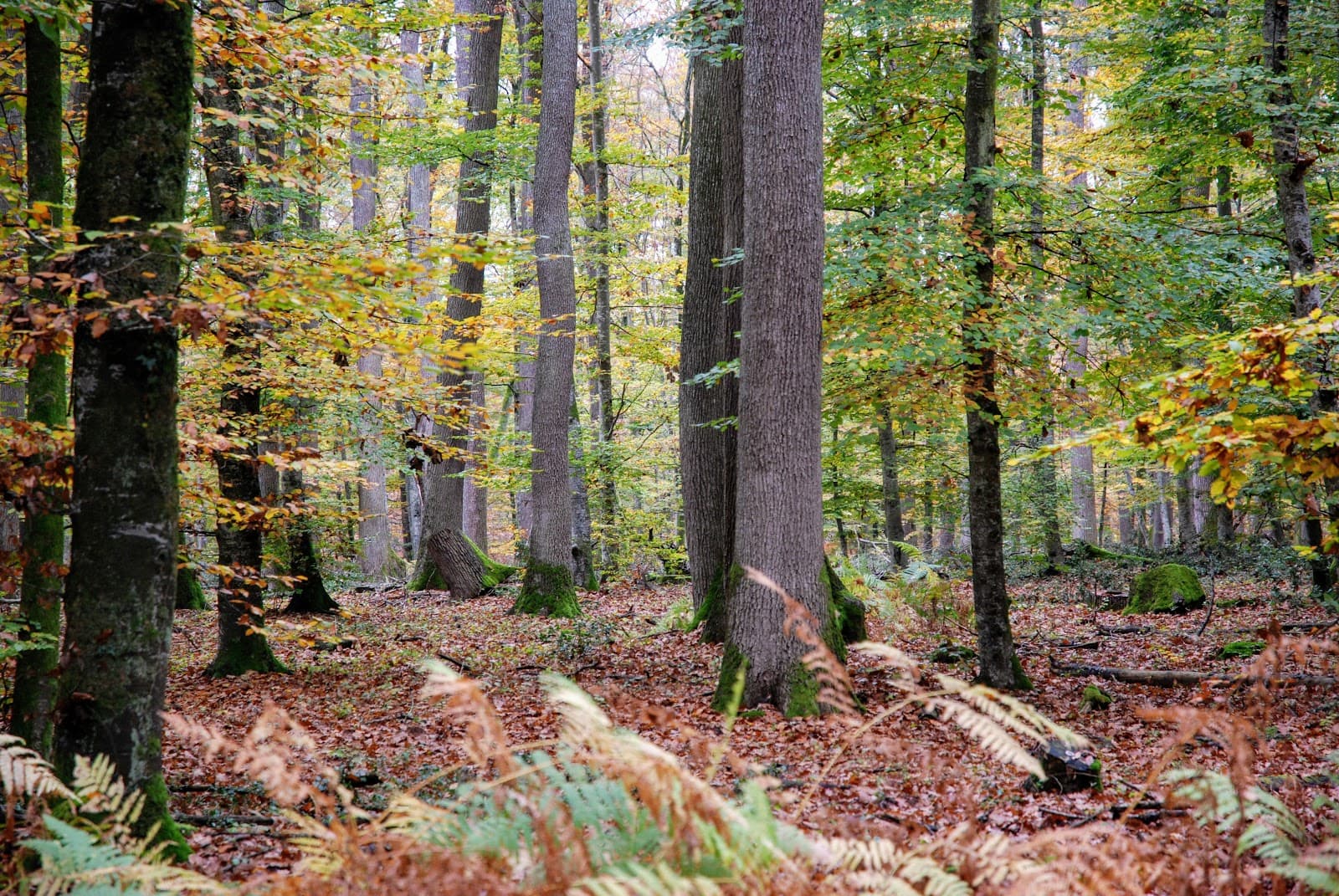
The first ceps (porcini, or penny buns) appear in Auvergne between the end of August and mid-September, depending on altitude and the summer rains. Where to look? In the big oak forests of the Allier, the beech and fir forests of the Livradois-Forez, the woods of the Combrailles and, more broadly, between 800 and 1,200 m. You will not find precise spots here, and we explain why. What you do take away is everything else: the real season, how to read a forest, the full regulations (including the famous 5-litre rule) and where to have your basket checked before you cook it. The guide to read before your first dodgy parasol mushroom.
Why we won't give you the spots
In Auvergne, a cep spot is handed down, not published. It is a family inheritance on a par with the recipe for potée (the traditional meat and vegetable stew). Some are passed down from grandfather to granddaughter with more solemnity than a savings passbook.
We respect this rule, and not just for the folklore. A spot published online means undergrowth trampled from the very first weekend, unreasonable baskets and exasperated local residents. The mushroom loses, the forest loses, everybody loses.
The good news: you don't need spots. You need to understand what a mushroom likes. Once you know how to read a forest (the tree species, the soil, the humidity), the whole of Auvergne becomes your hunting ground. And finding your own spot brings a pride like no other.
When to go: the real season
The season runs roughly from the end of August to the first real frosts. But it is not the same experience at 400 m in the bocage (hedged farmland) of the Bourbonnais and at 1,100 m on the plateaux. This is the region's great advantage: the layering of altitudes makes the pleasure last almost three months, in the heart of the Auvergne autumn.
| Period | What comes up (generally) | The conditions that matter |
|---|---|---|
| End of August, September | First ceps at altitude, last chanterelles | Summer storms followed by mild weather |
| October | The bulk of the season: ceps, horns of plenty, hedgehog mushrooms | Regular rain, cool nights without frost |
| November | End of the season in the lowlands, horns of plenty | Until the first real frosts |
No two years are alike: a dry autumn can delay or ruin an entire season. Treat this table as a trend, never as a promise.
The rule that really matters: rain
A cep does not consult the calendar. It comes up when it has had water, then mild weather. Generally allow one to two weeks between a good spell of rain and a good flush, if temperatures follow.
In concrete terms: a solid storm at the end of August, a mild week behind it, and the high-altitude beech forests wake up. A dry September, and everyone champs at the bit until October. Watch the weather more than the forums. And if rain falls on the day you planned your outing, we have what you need to pass the time while they grow.
Altitude, your ally
Early in the season, go up: the woods between 800 and 1,200 m benefit from the summer storms and the cool nights. Late in the season, come back down: the lowland oak forests are still producing when the summits have already frozen. Two terrains, one season, and you follow the flush the way you follow a tide.
Where to look: the productive massifs
At the scale of the massif, here is where Auvergne delivers. After that, it's up to you to walk.
The Forêt de Tronçais, the oak forest of the Allier
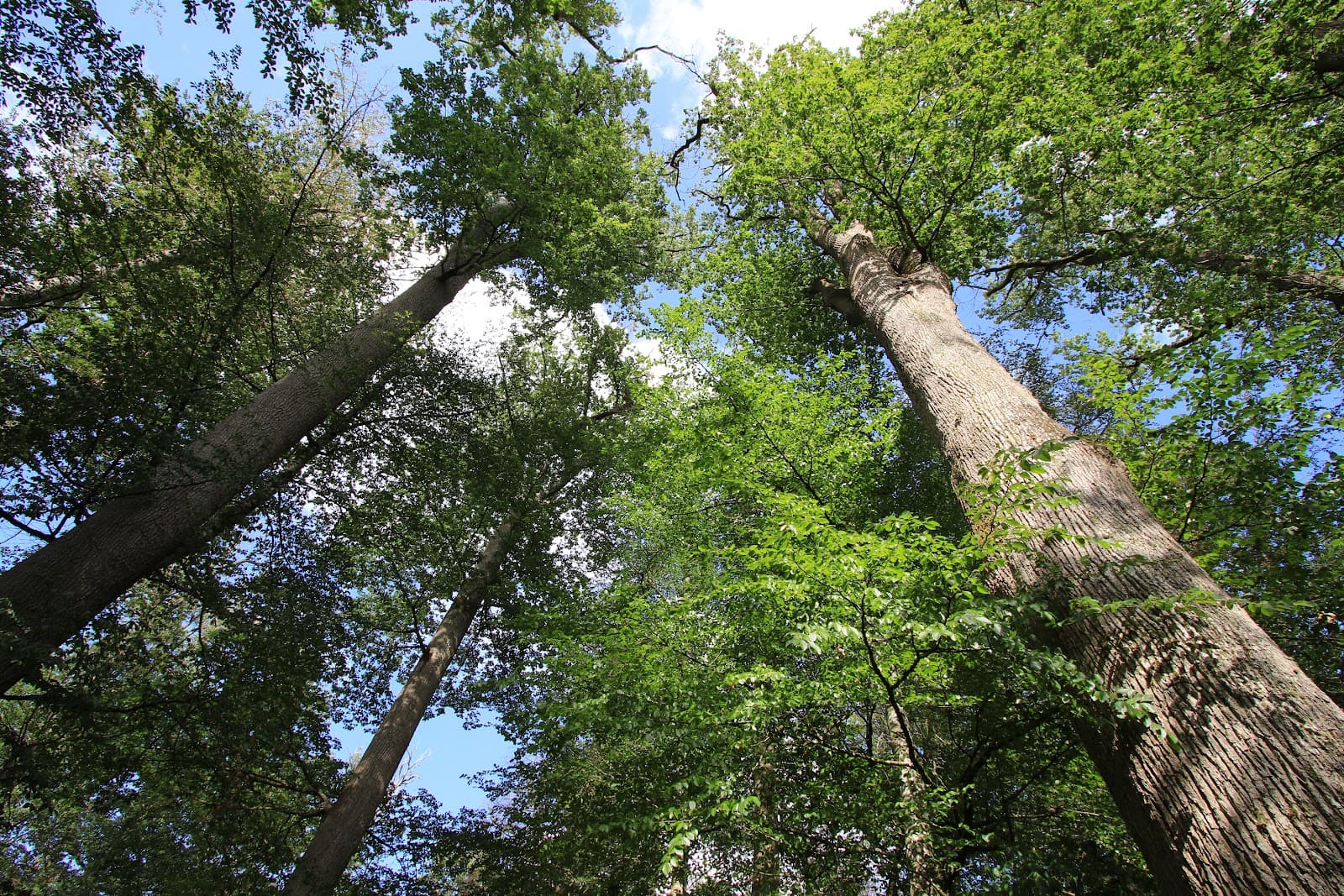
About 10,600 hectares of high forest, more than 80% oaks: the Forêt de Tronçais is an open-air school for anyone looking for ceps under broadleaved trees. Dominant oaks, beeches alongside: the classic duo of the penny bun (cèpe de Bordeaux).
It is a state forest (forêt domaniale) managed by the ONF (France's national forestry office): the rule of 5 litres per person per day applies there (more detail below). The forest also holds the Futaie Buffévent integral biological reserve, which has its own regulations. In September, listen out: you may well run into the season of the deer rut, and that's a bonus.
The Livradois-Forez, the cep belt par excellence
Beech and fir forests as far as the eye can see between 800 and 1,200 m, humidity, a variety of tree species: the Livradois-Forez ticks every box. The area even gave its name to a mycological and botanical society, founded in 1994 and which in 2017 became the Société mycologique, botanique et lichénologique d'Auvergne, headquartered at La Chaise-Dieu. That kind of detail never lies.
To take the measure of the terrain without a basket, two routes we like: the Livradois-Forez country tour for the overall picture, and the Cimes du Livradois circuit to walk precisely the altitude band that interests us.
The Combrailles, the land of wooded bocage
The Combrailles alternate bocage, oak and beech woods, gorges and plateaux. A fragmented terrain, often private: this is where the question “whose land am I on?” arises most. We come back to it below, because it is THE rule everybody forgets.
And everywhere else: aim for the 800-1,200 m band
Cantal, Haute-Loire, Sancy, Artense: wherever a beech wood or a beech and fir wood grows between 800 and 1,200 m, you have a chance. And beeches in autumn are a spectacle in themselves: even empty-handed, you won't have wasted your day.
Reading a forest rather than following a GPS
A few pointers worth all the “secret” spots in the world:
- The penny bun (cèpe de Bordeaux) likes oaks and beeches, often at the edge of woods or in clearings, on well-drained soil.
- The chanterelle (girolle) likes moss, under broadleaved trees as under conifers, in places that stay cool.
- The horn of plenty (trompette de la mort, “trumpet of death” in French; excellent, despite its name) hides in the leaf carpets of beech woods.
- The saffron milk cap (lactaire délicieux) grows under pines, often in groups.
- The hedgehog mushroom (pied-de-mouton) extends the season when the others throw in the towel.
Add two habits: favour the slopes that hold moisture, and remember that a place that has produced once will produce again. Your best tool is still a notebook, not a map bought online.
The regulations: what the law really says
The chapter everybody skims, and which annoys everybody. Let's sum it up, because the penalties are real.
Mushrooms belong to the landowner
This is the basic principle of the Civil Code: the mushroom belongs to the owner of the land. Even with open access, even without a fence, even without a sign. A wood without a barrier is not a public wood.
Yet a large part of Auvergne's forests is private. Picking without the owner's permission remains an offence, even in small quantities: a contravention (minor offence) below 10 litres, a délit (criminal offence) punished like theft beyond that. If in doubt: ask. An owner who is asked politely often says yes. And sometimes they tell you where not to go (the brambles, not the ceps, so don't get your hopes up).
In state forests: the 5-litre rule
In state-owned forests (Tronçais, for example), picking is tolerated for family consumption, up to 5 litres per person per day, unless local regulations are stricter. Five litres is already a fine basket: plenty to treat a table of guests.
| Volume picked (state forest) | What you risk |
|---|---|
| Up to 5 litres per person per day | Tolerated for family consumption |
| Between 5 and 10 litres | Fine of €135 (article R163-5 of the Forest Code) |
| Beyond 10 litres | A délit punished like theft: 3 years in prison and a €45,000 fine, 5 years and €75,000 if committed by several people |
Local rules exist too
Prefectural or municipal orders can restrict picking in certain communes or certain massifs: permitted days, reduced volumes, banned zones. In biological reserves, an order specific to each reserve sets the rules, and picking can be limited there, or even banned. Before an outing in an area you don't know, a phone call to the town hall saves you an unpleasant surprise.
Selling: forget it
A harvest from public forest cannot be sold, not even three ceps at a market. In private forest, nothing is picked without the landowner's permission. Foraging for pleasure is for your frying pan, not your piggy bank.
Checking the basket: pharmacists and associations
At the pharmacy: yes, but call first
Pharmacists are trained in mushroom identification during their studies. In practice, it varies a lot from one pharmacy to another: some are real mycology enthusiasts, others will point you to an association. The right reflex: phone before you go.
For a useful check, bring whole mushrooms (with the base of the stem, which gives away the dangerous species), fresh, and sorted by species. And if the verdict is a raised eyebrow: throw them out. An uncertain species is never worth a night in A&E.
Mycological associations: the best way to learn
Auvergne has a real network of mycological societies. Their autumn outings are the best possible investment for a beginner: a modest membership fee, outings led by experts, and identification sessions where everyone spreads their harvest on the table.
- Puy-de-Dôme: the Groupe Mycologique de Cournon, in Cournon-d'Auvergne.
- Allier: the Cercle Mycologique du Centre Hubert-Bourdot in Montluçon and the Société Mycologique du Val du Cher, in Domérat.
- Cantal: the Association Mycologique de Haute-Auvergne, in Riom-ès-Montagnes, which runs mycology days.
- Haute-Loire: the Groupe Mycologique de la Haute-Loire in Le Puy-en-Velay, and the Société Mycologique, Botanique et Lichénologique d'Auvergne (SMBLA), in La Chaise-Dieu, which organises outings and exhibitions.
The associations generally organise their mycological exhibitions in autumn.
Safety: the reflexes that keep you away from the poison centre
Every autumn brings its share of serious, sometimes fatal poisonings. A few mix-ups between edible and toxic species are enough. The reflexes that change everything:
- No “trick” works. Not the slug that supposedly tasted it before you, not the silver spoon, not the reassuring colour. These are legends, and they fill intensive care units.
- An app is not enough. Identification apps get it wrong, including on dangerous species. A first clue at best, a green light never.
- Photograph your harvest before cooking, species separated: if something goes wrong, the photo helps the poison centre identify the culprit and adapt the treatment.
- Do not mix species in the basket, and discard anything that has touched a doubtful species.
- Never raw. Cook each species separately and for long enough, in the order of 20 to 30 minutes in the frying pan.
- Cool and quick. In the fridge, away from other food, eaten within 2 days.
If you have symptoms after a meal of mushrooms (vomiting, diarrhoea, dizziness, trembling, vision problems): call 15 (the emergency medical number in France) or the Lyon poison centre on 04 72 11 69 11. Even several hours after the meal: some serious poisonings show up late.
The picker's good manners
- A basket, never a plastic bag. Mushrooms get crushed and ferment in it within an hour.
- Pick cleanly. Knife or twisting the stem, the two schools have been arguing for a century. What matters: don't rake, don't turn over the moss, don't plough up the leaf litter. The mycelium is the real wealth of the spot.
- Leave the very young and the very old specimens. The former have yet to give anything, the latter reseed.
- Stay discreet. Same rules as for the deer rut: park properly, never block a farm track, close the gates behind you.
- Think about hunting. Autumn is also the season of the battues (organised hunts): keep an eye out for “hunt in progress” signs and wear a bright colour.
Mushrooms are a way in. Behind them there are valley mists, golden beech woods, the first fires in the hearth: everything that makes autumn in Auvergne our favourite season. Empty-handed or with a full basket, you will have walked in a forest that smells of wet earth. That is already a good day.
Frequently asked questions
The FAQ
When do ceps grow in Auvergne?
Generally from the end of August until the first frosts, with a peak in September and October. Everything depends on the rain: allow one to two weeks between a good spell of rain and a flush, if the mild weather follows. Early in the season, look at altitude (800-1,200 m), then come back down to the lowland oak forests.
Can you pick mushrooms in the Forêt de Tronçais?
Yes. Tronçais is a state forest: picking is tolerated there for family consumption, up to 5 litres per person per day. Between 5 and 10 litres, you risk a €135 fine; beyond 10 litres, it is a délit (criminal offence). The forest also holds an integral biological reserve, the Futaie Buffévent, with its own regulations.
How many mushrooms are you allowed to pick?
In state forests, the tolerance is 5 litres per person per day, unless a local order is stricter. Between 5 and 10 litres, a fine of €135. Beyond 10 litres, it is a délit punished like theft: 3 years in prison and a €45,000 fine, 5 years and €75,000 if committed by several people. On private land, only the owner's permission counts.
Do pharmacists still check mushrooms?
Yes, but practice varies from pharmacy to pharmacy: all pharmacists have been trained, but not all do identification at the counter. Phone before you go, and bring whole, fresh mushrooms sorted by species. Local mycological associations remain the other good address, with their autumn identification sessions.
Can you sell the mushrooms you pick?
No, not for recreational picking: selling a harvest taken from public forest is banned. In private forest, nothing is picked without the landowner's permission.
Is a mobile app enough to identify a mushroom?
No. Identification apps regularly get it wrong, including on dangerous species. Take them at best as a first clue, never as a green light. Before cooking an uncertain harvest, have it checked by a pharmacist who does identification or by a mycological association. If in doubt, throw it out.